Book Review: The Stranger Beside Me: The Shocking Inside Story of Serial Killer Ted Bundy by Ann Rule

Book #173 of 2022:

The Stranger Beside Me: The Shocking Inside Story of Serial Killer Ted Bundy by Ann Rule

I sometimes have difficulty rating pieces of nonfiction, but my general principle is to weigh a work against the best possible version of itself, by asking what the author is trying to accomplish and how well I believe they’ve achieved it. In the case of this true-crime title from 1980, I’m not entirely convinced that that benchmark has been met.

The story behind the story remains incredible, even four decades on: writer Ann Rule was already under contract to write a book about a string of unsolved murders when she learned that a friend she’d met as a fellow volunteer on a suicide crisis hotline had been arrested and charged with the crimes. Ted Bundy is now known as a notorious serial killer, pedophile, and rapist, and this account of his awful prolific career preying on young women and girls in the 1970s is appropriately harrowing in its details of how he would kidnap and brutalize his victims. But it doesn’t yield much insight into what it was like for the journalist herself to go through this journey of discovering and confronting the truth of the matter. Although Rule can provide quotes from her personal correspondence with Bundy, her presentation of the facts doesn’t read as too dissimilar from what anybody else could have written on the subject.

Now, as a reader largely unfamiliar with the man beforehand, I am satisfied — well, horrified, but you know — with The Stranger Beside Me. The author ably captures his dangerous charm and his reputation as a folk hero for his multiple prison escapes, as well as his cruelty and of course his terrible body count. It’s all pretty thorough and shudder-inducing, and I expect I’ll feel no particular urge to read anything about Bundy ever again. But if I had come to this volume previously aware of those things, I think I would be disappointed by the lack of personality exhibited in its pages. It’s ultimately not a narrative about the late Ann Rule at all, even though she’s the distinctive element here and one of the two parties referenced in the title. When I consider how much of herself Michelle McNamara poured into I’ll Be Gone in the Dark as merely an obsessive amateur researcher on the Golden State Killer, it’s hard not to feel let down by the relative neutrality of this genre predecessor that could/should have contained so much more firsthand material.

[Content warning for ableist slurs.]

★★★☆☆

Like this review?
–Throw me a quick one-time donation here!
https://ko-fi.com/lesserjoke
–Subscribe here to support my writing and weigh in on what I read next!
https://patreon.com/lesserjoke
–Follow along on Goodreads here!
https://www.goodreads.com/user/show/6288479-joe-kessler
–Or click here to browse through all my previous reviews!
https://lesserjoke.home.blog

Book Review: The Law of Innocence by Michael Connelly

Book #172 of 2022:

The Law of Innocence by Michael Connelly (Mickey Haller #6)

One thing I appreciate about author Michael Connelly’s ongoing Harry Bosch franchise (1992 – present) is that it has always played fairly with the passage of time. With the exception of a few short stories that revisit prior points in the detective’s career, each installment takes place after the last, with evidence of shifting technologies, background incorporation of real news events, and progressive milestones in the characters’ lives. When Bosch was facing down an age-mandated retirement from the LAPD in The Drop, for example, that introduced a ticking clock that soon culminated in his leaving the force. He’s now a private investigator, his daughter Maddie has graduated college and entered the police academy, and her cousin Hayley is a first-year law student. Other series might fudge or ignore such internal chronology in favor of a static status quo, but these installments are all firmly situated in their particular distinctive moments.

The relevance of all that to this latest novel about Harry’s half-brother the Lincoln Lawyer, published in the fall of 2020 but set earlier that year, is that the encroaching Covid-19 pandemic is suddenly terribly important. Not to bury the lede, but this story starts with Mickey arrested for the murder of a client, and for most of the book when he’s not in court defending himself, he is in a crowded jail with poor ventilation and no appreciable pathogen safety protocols. Writing shortly thereafter, Connelly uses the reader’s knowledge of the dawning crisis to terrific effect, peppering the text with overheard reports out of Wuhan and a gradual increase in the sight of people wearing masks. An already-tense narrative is escalated further by the creeping horror of this element, since continued imprisonment would now be so much more dangerous for the protagonist. To be honest, it’s probably the most effective use of the coronavirus I’ve seen in fiction yet.

Even setting that aside, however, this is a great read. We’ve known Haller for too long to be in any doubt about his innocence, and his team settles on a likely suspect for framing him — an old enemy from The Fifth Witness — pretty quickly. Yet the prosecution’s case seems so strong, and the defense’s so relatively weak, that the result is a page-turning thrill ride simply to see how the hero and his friends can manage to win the day and secure his freedom, while staying just within the bounds of their judicial ethics and avoiding the unknown enemies the attorney appears to have acquired behind bars. Connelly has also grown as a writer over the years, and he’s learned that we don’t need to necessarily see every procedural step in a trial, which streamlines the plot and marks an improvement over some of the previous Mickey Haller volumes. I don’t know that I would recommend jumping into the canon here, but returning ‘Boschiverse’ fans will find plenty to enjoy in the high stakes of this role reversal that gives the lawyer sudden perspective on a different side of the justice system.

[Content warning for gun violence, gore, and addiction.]

★★★★☆

Like this review?
–Throw me a quick one-time donation here!
https://ko-fi.com/lesserjoke
–Subscribe here to support my writing and weigh in on what I read next!
https://patreon.com/lesserjoke
–Follow along on Goodreads here!
https://www.goodreads.com/user/show/6288479-joe-kessler
–Or click here to browse through all my previous reviews!
https://lesserjoke.home.blog

TV Review: Bob’s Burgers, season 10

TV #54 of 2022:

Bob’s Burgers, season 10

A full decade into its span, and I am running out of things to say about Bob’s Burgers. This is the first season I’ve seen in a while that’s actually been new to me — I originally stopped watching after the previous one finished airing in 2019, and then only recently went back and started the show again from the very beginning — but I still can’t say that it feels particularly fresh. This series offers reliable, comfort-food television, but it hasn’t been taking risks or pushing its characters into unfamiliar territory in quite some time now. New additions like Kaylee don’t seem especially distinctive, and when the program does deviate from its usual scope and structure, it’s just to deliver the latest iteration of the old Belcher-kids-telling-elaborate-stories framework. As I’ve remarked before: I’m still laughing at the jokes, but I’m not really being surprised by anything anymore.

As is often the case, the Thanksgiving and Christmas adventures (“Now We’re Not Cooking with Gas” and “Have Yourself a Maily Linda Christmas,” respectively) are relative highlights, and I also rather enjoyed the weird specificity of premise to “Poops!… I Didn’t Do It Again.” There are definitely a few weaker half-hours to balance that out, however, plus the unconscionable oversight of naming an episode after A Fish Called Wanda and then not including a role for the recurring character Mr. Fischoeder who’s voiced by Kevin Kline. A real missed opportunity… which unfortunately seems to characterize a lot of Bob’s Burgers these days.

★★★☆☆

Like this review?
–Throw me a quick one-time donation here!
https://ko-fi.com/lesserjoke
–Subscribe here to support my writing and weigh in on what I read next!
https://patreon.com/lesserjoke
–Follow along on Goodreads here!
https://www.goodreads.com/user/show/6288479-joe-kessler
–Or click here to browse through all my previous reviews!
https://lesserjoke.home.blog

Book Review: Shadows of Self by Brandon Sanderson

Book #171 of 2022:

Shadows of Self by Brandon Sanderson (Wax and Wayne #2 / Mistborn #5)

[Disclaimer: I am Facebook friends with this author.]

As I mentioned in my review of that previous title, this era of the Mistborn series grew out of a writing exercise that author Brandon Sanderson liked enough to expand into the novel The Alloy of Law. That tale, with its Wild West flair and imaginative new exploits of the setting’s Metallic Arts, turned out to be a whole lot of fun, but it was still intended as a standalone peek at the changing world of Scadriel before the writer would someday return even further into its future for a more sci-fi approach. At some point, however, he decided to first revisit the characters of Wax and Wayne for some additional adventures, thereby expanding their sub-series into a quartet and putting off the later epoch for another day.

This 2015 volume, then, has to function as a direct sequel to a project that wasn’t originally written to set one up, in addition to more purposefully laying the groundwork for what comes next. And it meets those goals, more or less, but the seams are noticeable and somewhat at the expense of the immediate story at hand. The reintroduction of the kandra into human society is a tad awkward, as are the vague grumblings about encroaching modernity that never receive the full thematic consideration it feels like they should. The majority of the storyline finds the heroes perpetually one step behind the current villain, which is not the most satisfying read. There’s not much movement on what’s theoretically the larger plot. And while Sanderson is famous for his twists, the retcon at the end seems needlessly cruel and included only to twist the knife in a protagonist who is already rather angsty and humorless.

That’s probably my biggest critique, that this novel simply isn’t as enjoyable as the one(s) before it. Even the magical combat scenes, which are usually a highlight of the franchise, don’t appear to carry the same spark of creative choreography, let alone any cool new uses of Allomantic or Feruchemical powers. (The antagonist can tap a metalmind to move faster than the eye can see, but that’s pretty similar to Wayne’s time bubbles, and we don’t really get to observe it in action — although there is one neat moment when both abilities are activated at once, resulting in the enemies moving at regular speed to one another’s perspective while everyone else in the room around them is frozen.)

So I have mixed feelings, which I believe was my main takeaway the first time I read the book, too. At the end of the day, it’s a polished installment from a competent enough author that it avoids being a total misfire. It is always nice to check in on the cosmere again — there’s even a blink-or-you’ll-miss-it sighting of the mysterious worldhopper Hoid, reappearing after centuries to prove he’s either a time-traveler or immortal — and the work overall is a reasonably solid fantasy crime thriller. It achieves what it sets out to do, but that’s far from the critical praise I generally have for this writer.

[Content warning for gun violence, body horror, and gore.]

★★★☆☆

Like this review?
–Throw me a quick one-time donation here!
https://ko-fi.com/lesserjoke
–Subscribe here to support my writing and weigh in on what I read next!
https://patreon.com/lesserjoke
–Follow along on Goodreads here!
https://www.goodreads.com/user/show/6288479-joe-kessler
–Or click here to browse through all my previous reviews!
https://lesserjoke.home.blog

TV Review: The Good Fight, season 6

TV #53 of 2022:

The Good Fight, season 6

A relatively strong end to a perpetually-messy series that nevertheless captured a lot of the tension of life in a time of rising American fascism. Did Andre Braugher need to get brought in as the firm’s latest named partner? No, not particularly. Was the season weakened by its repeated treatment of the ongoing riot outside the building as a generic mob with no discernable politics? Definitely in my opinion, with the final episodes feeling sharper once that ambiguous framing was dropped and the racist and antisemitic chanting could be plainly heard. Did Diane have to spend the year blitzed out on whatever her new drug of choice was called? Nah, but at least it eventually connected her with a romantic interest who was served well in the narrative as a foil for Kurt — the old YA standby of a love triangle functioning thematically to represent two opposing paths that a protagonist might choose between.

Eli Gold makes his long-delayed reappearance here, cursing up a storm as it feels like his character should have been doing all along, if only network television were as forgiving as Paramount+ in that regard. He’s not quite the last familiar face from The Good Wife to finally pop up on this spinoff, but he’s one of the biggest, and his return arc both underscores his terrific comic presence and finds new material for a more meaningful sendoff. Otherwise, though, this isn’t really a season that’s terribly concerned with much of what’s gone before it. Both TGW and TGF have shed plenty of cast members across the years, and we get no final appearances from any of the departed Fight originals like Lucca, Maia, or Adrian, let alone any other major players like Alicia or Kalinda from the parent program.

Still, the extremist threat builds nicely over the course of this run, culminating in a genuinely harrowing armed white supremacist assault on the practice. Spoiler alert: everyone thankfully survives that, and their various fates / farewell notes generally feel earned. I’ve never wholly vibed with this show’s more fanciful elements, like the political candidate in the penultimate hour who can heal with a laying-on of hands, but I appreciate how that’s muted at the end in favor of an acknowledgement both weary and uplifting that the fight opposite chaos, terror, and injustice never truly stops. There’s a cyclical, almost Sisyphean nature to these problems and the labors against them, and that’s a note that’s just about powerful enough to look past all the fumbled plot points and absurd developments along the way. It doesn’t reflect the franchise at its “Hitting the Fan” heights, but it’s a stronger (presumed) closing statement than we potentially might have gotten.

[Content warning for gun violence, rape, slavery, police brutality, and gore.]

This season: ★★★☆☆

Overall series: ★★★☆☆

Seasons ranked: 2 > 1 > 6 > 5 > 3 > 4

Like this review?
–Throw me a quick one-time donation here!
https://ko-fi.com/lesserjoke
–Subscribe here to support my writing and weigh in on what I read next!
https://patreon.com/lesserjoke
–Follow along on Goodreads here!
https://www.goodreads.com/user/show/6288479-joe-kessler
–Or click here to browse through all my previous reviews!
https://lesserjoke.home.blog
Book Review: Such Sharp Teeth by Rachel Harrison

Book #170 of 2022:

Such Sharp Teeth by Rachel Harrison

This title is too straightforward for too long, telling the story of a woman getting bit by a werewolf with little to distinguish it from any other iteration of that plot. It’s all competent, but somewhat unremarkable, and as I read along, I kept impatiently thinking, “Yes, and?” while waiting for some further complicating detail. There’s a hint of what I was after around a third of the way through the text, when the protagonist discloses a childhood assault and starts considering all the rage deep inside her as something that might be universal to women and now possible to express in her wolf form. But I still don’t feel especially hooked on this narrative.

I think part of the problem for me as a reader is that this novel skews close to a few genres that I’m fundamentally less interested in: paranormal romance, romantic comedy, and Hallmark Channel Original Movies. Our heroine is a financially-secure career woman in the big city who has returned to her hometown to support her pregnant sister, where she soon sparks up a fling with the hunky friend who used to have a crush on her back in high school. There’s steamy PG-13 action and tedious drama caused by miscommunication, but as with the supernatural angle, it all seems very by-the-book — as though author Rachel Harrison were content to mash up those tropes without ever quite finding an original spin on any of them.

The end result is a work that I like just fine but do not love. More worldbuilding or other creativity on the fantasy/horror side, or more leaning into the inherent humor of the disparate elements combining, and this could have been a real winner. But as is, although I’m sure there are audiences who will enjoy it better, it gets only a three-star rating from me.

[Content warning for incest, body horror, and gore.]

★★★☆☆

Like this review?
–Throw me a quick one-time donation here!
https://ko-fi.com/lesserjoke
–Subscribe here to support my writing and weigh in on what I read next!
https://patreon.com/lesserjoke
–Follow along on Goodreads here!
https://www.goodreads.com/user/show/6288479-joe-kessler
–Or click here to browse through all my previous reviews!
https://lesserjoke.home.blog

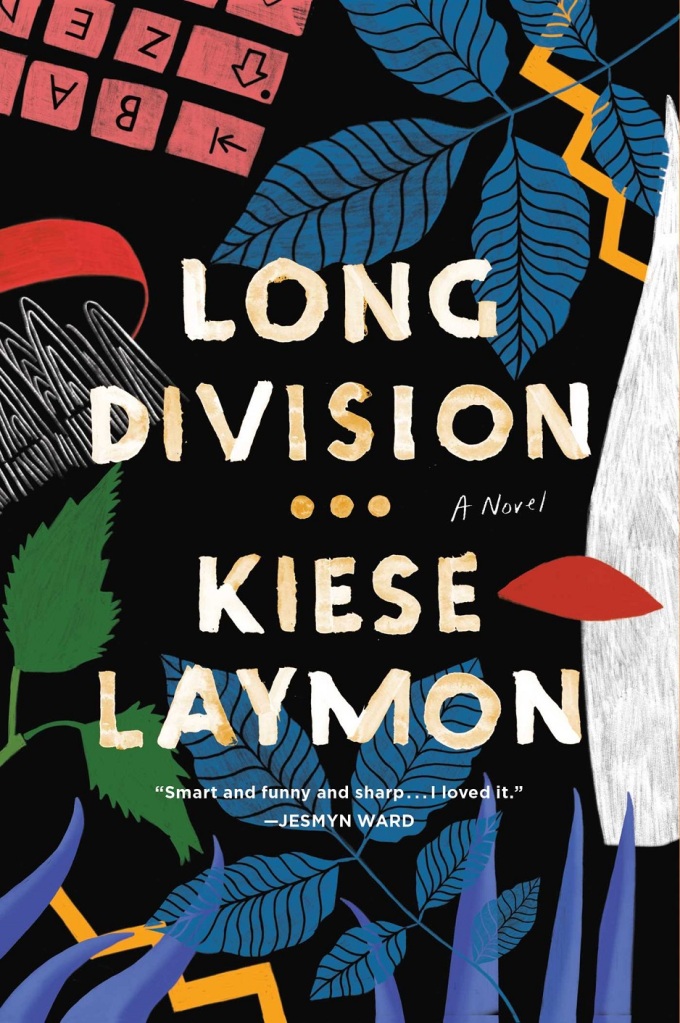
Book Review: Long Division by Kiese Laymon

Book #169 of 2022:

Long Division by Kiese Laymon

This 2013 authorial debut has some interesting ideas and a distinctive voice for its protagonist(s), but it strikes me as overall too jumbled and underdeveloped to land with much impact. The plot, as I understand it: a young Black teen in the modern age, struggling with potential queer feelings for his school rival / friend and having recently gone viral for calling out the racism of a spelling bee-like competition that kept giving students of color words that would be uncomfortable or stereotypical for them to repeat, stumbles across a book called Long Division. In it he finds the story of a boy with his same name in 1985, who winds up time-traveling to 2013, where he meets a girl who turns out to be his future daughter. She has the same name as a neighbor who’s gone missing in the reader’s reality… as well as a copy of a book called Long Division about a kid with his name going viral on the internet and so on. Later they go back to 1964 to try to save his grandfather from being lynched by the KKK.

The narrative alternates back and forth between these two people who are each fictional to one another, with context clues generally helping to identify the switch, but not always right away. It’s all a bit chaotic and unclear, especially for so short a novel (276 pages in paperback), and none of the characters ever seem to react to the patently weird stuff happening around them with anything but matter-of-fact disinterest. There’s a lot of unchallenged antisemitism, fatphobia, and homophobia including slurs, along with bizarre throwaway details like one of the heroes meeting a talking cat or the fact that his counterpart once pleasured himself while thinking about his grandmother. The whole project is frankly a mess, and often feels like an attempt to be provocative without necessarily demonstrating the substance or discipline to channel the ensuing attention productively.

I know that author Kiese Laymon’s more recent memoir Heavy has attracted rave reviews, and perhaps I should have started there. He’s still speaking from a specific southern Black perspective in this earlier work, but those #ownvoices insights are somewhat lost in the delivery.

[Content warning for gun violence, domestic abuse, and gore.]

★★☆☆☆

Like this review?
–Throw me a quick one-time donation here!
https://ko-fi.com/lesserjoke
–Subscribe here to support my writing and weigh in on what I read next!
https://patreon.com/lesserjoke
–Follow along on Goodreads here!
https://www.goodreads.com/user/show/6288479-joe-kessler
–Or click here to browse through all my previous reviews!
https://lesserjoke.home.blog

Book Review: Dracula by Bram Stoker

Book #168 of 2022:

Dracula by Bram Stoker

First published in 1897, this gothic horror novel remains an influential classic. Its characters like Van Helsing and the bloodsucking Count himself are now household names, and so many of our cultural ideas about vampires that subsequent stories have either reiterated or consciously pushed back against can trace their origins to here, if not further to the then-obscure myths that author Bram Stoker was drawing upon. Yet it’s a production all its own despite over a century of imitators and successors, with plenty of distinctive elements that are well worth revisiting. (A personal favorite of mine: the writer tends to set his most pulse-pounding adventure sequences in the daylight, with his mortal protagonists racing the setting sun to accomplish their current goal while their enemy is at his weakest, knowing that he will rise and be upon them as soon as darkness falls. So many later plots involving the undead, for whatever reason, place them as active adversaries in more of a survive-the-night mode instead.)

It’s a Victorian title through and through, which means it has some interesting philosophical reflections on society around all the action and the scares, but also that it’s unfortunately and sometimes hilariously dated in its impressions of science and of gender. There’s likewise no escaping how racist, antisemitic, and generally xenophobic this depiction of Dracula is, as a hook-nosed hairy foreigner eating babies and invading the Christian nation of England to prey on the purity of its white women. But overall it’s a fun throwback read, with the epistolary format allowing for a lively rotating cast to deliver the various segments of its narrative.

This year, I reread the novel by means of the ‘Dracula Daily‘ listserv, which sends out an email digest reproducing all the letters, newspaper articles, journal entries, and so on that make up this tale on the same date that they’re marked on the page. So since the entirety of Dracula unfolds between May 3rd and November 6th of one calendar year (plus a brief ‘seven years later’ epilogue sent out today), I’ve spent the past six months following along with these fictional events essentially as everything happened. I wouldn’t do this every year — I don’t like Stoker’s Dracula quite enough for an annual reread — but it was a neat way to stay in the moment alongside the heroes, not to mention encourage a closer reading and engage with a community on social media all consuming the text at the same pace. If you missed out on this year’s run, I highly recommend signing up for the next one, or even just parceling out the book that way sometime yourself.

[Content warning for ableism, rape, and gore.]

★★★★☆

Like this review?
–Throw me a quick one-time donation here!
https://ko-fi.com/lesserjoke
–Subscribe here to support my writing and weigh in on what I read next!
https://patreon.com/lesserjoke
–Follow along on Goodreads here!
https://www.goodreads.com/user/show/6288479-joe-kessler
–Or click here to browse through all my previous reviews!
https://lesserjoke.home.blog

TV Review: Anne Rice’s Interview with the Vampire, season 1

TV #52 of 2022:

Anne Rice’s Interview with the Vampire, season 1

Despite carrying the novelist’s name prominently appended to the title, this is one of those curious adaptations that alters or completely jettisons nearly all of its source material, for better or for worse. The difference is immediately apparent, since in the original book our protagonist Louis is a white plantation owner who gets turned into one of the undead in 1791, whereas here, he’s a Black brothel boss in 1910. That’s a dramatic new angle of approach on the story, and it requires a correspondingly massive overhaul of events. The classic Brad Pitt and Tom Cruise movie captured the novel relatively faithfully, but this is a production more like the Hannibal TV show that takes only the broadest-stroke plot indicators from the page. Though it maintains the New Orleans setting, even filming on-location for verisimilitude, most scenes are made up whole-cloth by the scriptwriters, rather than actually reflecting anything penned by the late Anne Rice.

Two other notable departures mark this series debut. The first involves aging the child vampire Claudia from 5 to 14 — which makes her easier (and less gross) to portray over the decades as an adult stuck in that body, but inherently weakens the dysphoric conflict at her root. I’ll reiterate my old Twilight complaint here that if you’re an immortal who looks like a high-schooler, you could easily pass as a youthful grown-up instead just by updating your wardrobe and your demeanor in a way that the girl’s written counterpart couldn’t. No one is forcing you to live the societal role of a young teen forever, Edward/TV Claudia! She’s Black in this version as well, while her and Louis’s sire Lestat remains a white European, which adds an extra dimension to his abusive entitlement and their eventual rebellion against it. The second big change for the program is that those two men are explicitly presented as romantic partners throughout, with Lestat and Louis embracing, and kissing, and regularly talking about their passionate physical love for one another. They sleep together in the same coffin! Louis identifies himself as queer in the contemporary framing device! It’s a welcome update to the ambiguity and dubious subtext of prior iterations of their dynamic, as well as the legendarily litigious rage their author used to direct at any fanfiction that dared stray in that direction.

Ultimately, however, I am no better than lukewarm on this season overall. It’s a great star turn and acting showcase for Jacob Anderson after his memorable supporting appearances on Game of Thrones and Doctor Who, but the plot drags and never seems to come up with anything interesting to say beyond its initial divergences from canon. (And the representation is a meaningful addition to the franchise, but I mean… It’s 2022. These angsty French speakers aren’t even the only interracial gay vampire couple on television these days.) The modern interview scenes are particularly egregious, as they appear dramatically flat and essentially just repeat the exact same beats at every check-in until a final twist that lands with a thud for book readers and probably no impact at all for newcomers. And at the end of this run, we’ve covered maybe half of the first volume, in a series with rights to the entire dozen or more installments of Rice’s Vampire Chronicles. Although I haven’t minded the experiment for the most part, I think I’m content to let my AMC+ subscription lapse at this point and not bother following along any further.

[Content warning for racism, homophobia including slurs, rape, gore, suicide, and domestic abuse.]

★★★☆☆

Like this review?
–Throw me a quick one-time donation here!
https://ko-fi.com/lesserjoke
–Subscribe here to support my writing and weigh in on what I read next!
https://patreon.com/lesserjoke
–Follow along on Goodreads here!
https://www.goodreads.com/user/show/6288479-joe-kessler
–Or click here to browse through all my previous reviews!
https://lesserjoke.home.blog

Book Review: A Wizard of Earthsea by Ursula K. Le Guin

Book #167 of 2022:

A Wizard of Earthsea by Ursula K. Le Guin (Earthsea #1)

Author Ursula K. Le Guin’s first Earthsea novel — following two short stories in the setting she’d already published elsewhere — recounts the early life of its titular character, whom we are repeatedly told will someday be the most powerful enchanter alive. This is her Merlin figure, but she situates us in his childhood and not his years of glory, aiming to explore what sort of a person might grow up to become such a force of power. (The book was written in 1968, well before the magical school trope and YA fantasy in general had really taken shape in the English literary landscape.)

The protagonist’s bildungsroman is our viewpoint entry into this dark-skinned archipelago civilization, and the writer generally manages to convey its sparse yet distinctive details with a minimum of exposition. There’s a certain distance throughout the affair, however, as though we are reading from an ancient chronicle and not a personality-driven adventure story — more Thomas Malory’s Le Morte D’Arthur than T. H. White’s The Once and Future King, to stretch the Arthuriana metaphor further.

Yet while it may be hard to particularly invest in the hero’s journey, Le Guin throws so many dazzling concepts at us that it’s easy to bask in her imagination and the seductively gentle tone of the narrative. A lot of her ideas about true names and shadow selves and the land of the dead and maintaining balance in the universe have percolated through the genre in her wake, but they start here, with a boy fleeing from a terror that his reckless sorcery has brought into the world, until he finds the courage and wisdom to turn and give chase to it instead. The ensuing series is only a loose saga, and later volumes would return to critique this one for its patriarchal implications and limited roles for girls and women, but it’s overall an influential classic that’s well worth revisiting today.

[Content warning for domestic abuse.]

★★★★☆

Like this review?
–Throw me a quick one-time donation here!
https://ko-fi.com/lesserjoke
–Subscribe here to support my writing and weigh in on what I read next!
https://patreon.com/lesserjoke
–Follow along on Goodreads here!
https://www.goodreads.com/user/show/6288479-joe-kessler
–Or click here to browse through all my previous reviews!
https://lesserjoke.home.blog

Design a site like this with WordPress.com
Get started